
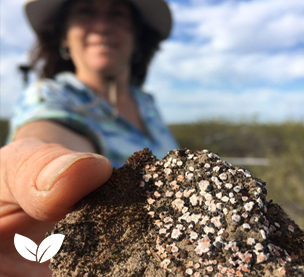
Land degradation in arid Ecosystems
Nutrients and Herbivores
Changes in climate and land use (e.g., increased grazing pressure), are two main global environmental change and desertification drivers in drylands (arid, semi-arid and dry-subhumid areas). Understanding how dryland ecosystems will respond to them is crucial because they cover 45% of the world’s land surface and host over 38% of the human population. Drylands are also of paramount importance for biodiversity, as they host many endemic plant and animal species, and include about 20% of the major centers of global plant diversity and over 30% of the designated endemic bird areas.
Main Publications from this project
- Yahdjian L., Carboni L.J., Velasco Ayuso S., Oñatibia G.R. 2022. Intensification of livestock farming in times of climate change: The challenges of domestic grazing in the drylands of the Argentine Patagonia. Metode Science Studies Journal, 13: 25–31. ISSN 2174-3487. eISSN: 2174-9221. https:// doi.org/10.7203/metode.13.21553. Also available in Spanish.
- Maestre F.T., Le Bagousse-Pinguet Y., Delgado-Baquerizo M., Eldridge D.J., Saiz H., Berdugo M., Gozalo B., Ochoa V., Guirado E., García-Gómez M., Valencia E., Gaitán J.J, Asensio S., Mendoza B.J., Plaza C., Díaz-Martínez P., Rey A., Hu H., He J., Wang J.T., Lehmann A., ….BIODESERT CONSORTIUM…Yahdjian L., Zaady E., Zhang Y., Zhou X., Singh B.K., Gross N. 2022. Livestock grazing and ecosystem service delivery in global drylands. Science 378 (6622): 915-920. DOI: 10.1126/science.abq4062.

Institutional links

Facultad de Agronomía UBA
Associate Professor Cátedra de Ecología, Dto. de Recursos naturales y ambiente

EPG FAUBA
Director of the Maestría en Recursos Naturales Renovables Terrestres

Asociación Argentina de Ecología
President

Instituto de Investigaciones Fisiológicas y Ecológicas Vinculadas a la Agricultura
Principal researcher

Consejo Nacional de Investigaciones
Científicas y Técnicas
Principal researcher